Skip to content

Trip Summary & Highlights

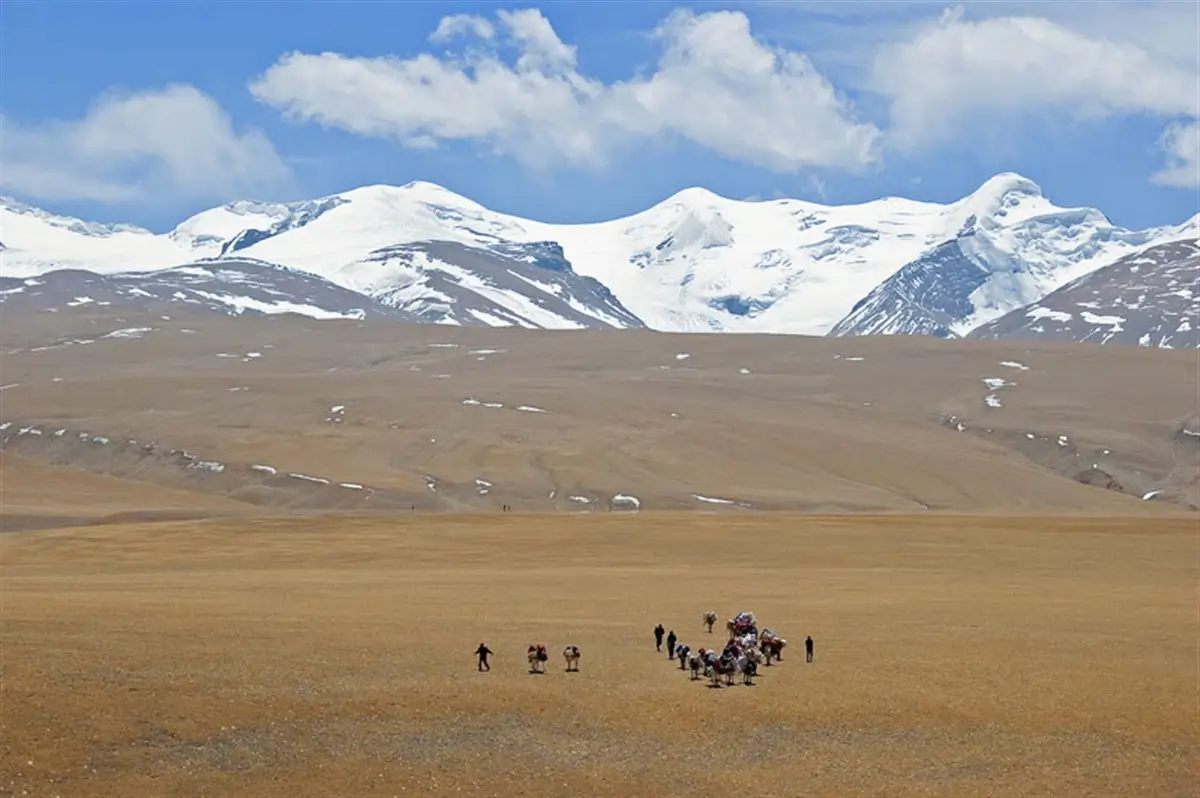
The Saribung Pass Trek with Saribung Peak Climbing is a monumental 28-day odyssey through the most secluded corners of the Mustang Himalayan region. This expedition is not merely a walk in the mountains; it is a high-altitude traverse that connects the ancient, arid kingdom of Upper Mustang with the mystical, stone-walled village of Phu.

Beginning in the “Last Forbidden Kingdom” of Mustang Nepal, you will journey through desert-like landscapes, explore the walled capital of Lo-Manthang, and visit the sacred Damodar Kunda lakes. The adventure culminates in the technical crossing of the 6,042m Saribung Pass and the optional but exhilarating ascent of Saribung Peak (6,328m). This trek is designed for elite adventurers seeking a “Mustang to Phu Trek” experience that combines deep Tibetan culture with world-class mountaineering.

Trip Highlights

  • Glacial Traverse: Experience the Mustang to Phu Trek, one of Nepalu2019s most beautiful and remote glacial crossings.
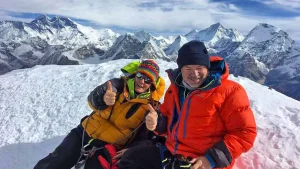
  • Peak Conquest: Achieve the summit of Saribung (6,328m) for 360-degree views of the Annapurna and Dhaulagiri ranges.
  • High Pass Adventure: Test your limits at the Saribung Pass, standing at a staggering 6,042 meters.
  • Forbidden Kingdom: Explore the walled city of Lo-Manthang and its 14th-century monasteries.
  • Sacred Waters: Visit the holy Damodar Kunda, a high-altitude pilgrimage site for Hindus and Buddhists.
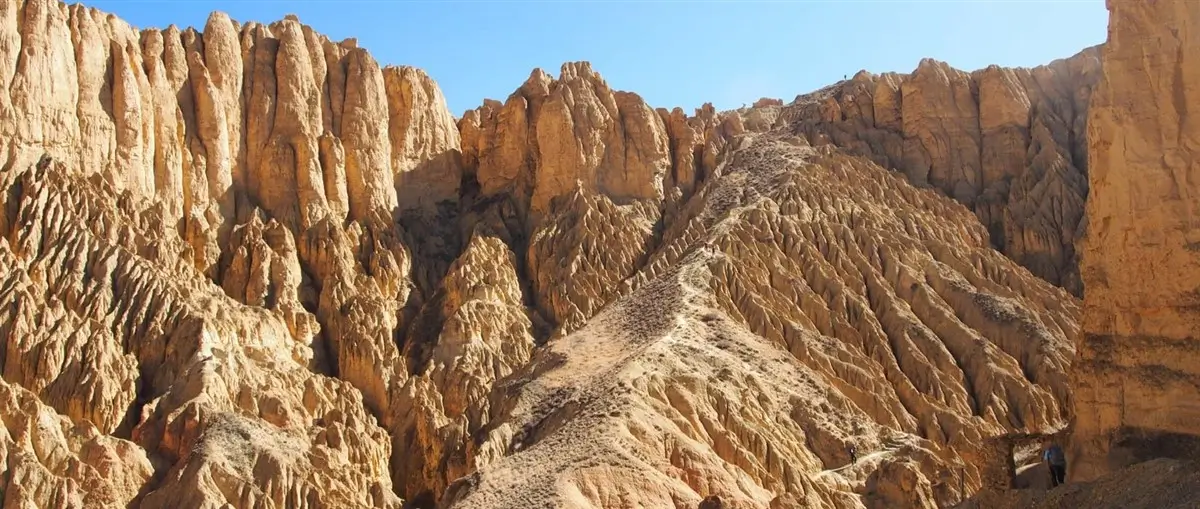
  • Hidden Valleys: Discover the untouched Nar-Phu valley, featuring unique "organ-pipe" cliffs and medieval Tibetan culture.

Trip Infos

Duration

28 Days

Trip Grade

Moderate

Best Season

August, September, mid October

Accomodation

Star Hotel, Teahouse and Camping

Permits

Special Mustang and Naar Phu Permit and ACAP Permit Fee

Departure from

Kathmandu to Kathmandu

Meal

Breakfast, Lunch and Dinner

Maximum Altitude

Maximum Altitude 6328m


Detailed Day-to-Day Itinerary

When you arrive in the airport our staff will receive you at Tribhuvan International airport, Kathmandu. He/ She will be displaying a placard with Himalayan Travelers Trek & Expedition written in it outside the airport terminal. He will meet, greet and welcome you with auspicious garland and escort you to your respective hotel by our private tourist vehicle. At the hotel, he will assist you to check in and do pre-trip meeting with you. Overnight at hotel.

On this day, you can visit the world historical site in Kathmandu and prepare for the trek. You will also be briefed about your overall program on this day, introduce your guide and clear your questions/inquiries if any. Overnight at hotel.

After breakfast, drive to Pokhara. The road takes us out of the Kathmandu Valley along the Prithivi Highway. On the way, we can see Trisuli River( one of the famous rafting river of Nepal) and rafters rafting on. After you reach Pokhara and check into your hotel you can roam around the Fewa Lake and go for boating and relax.

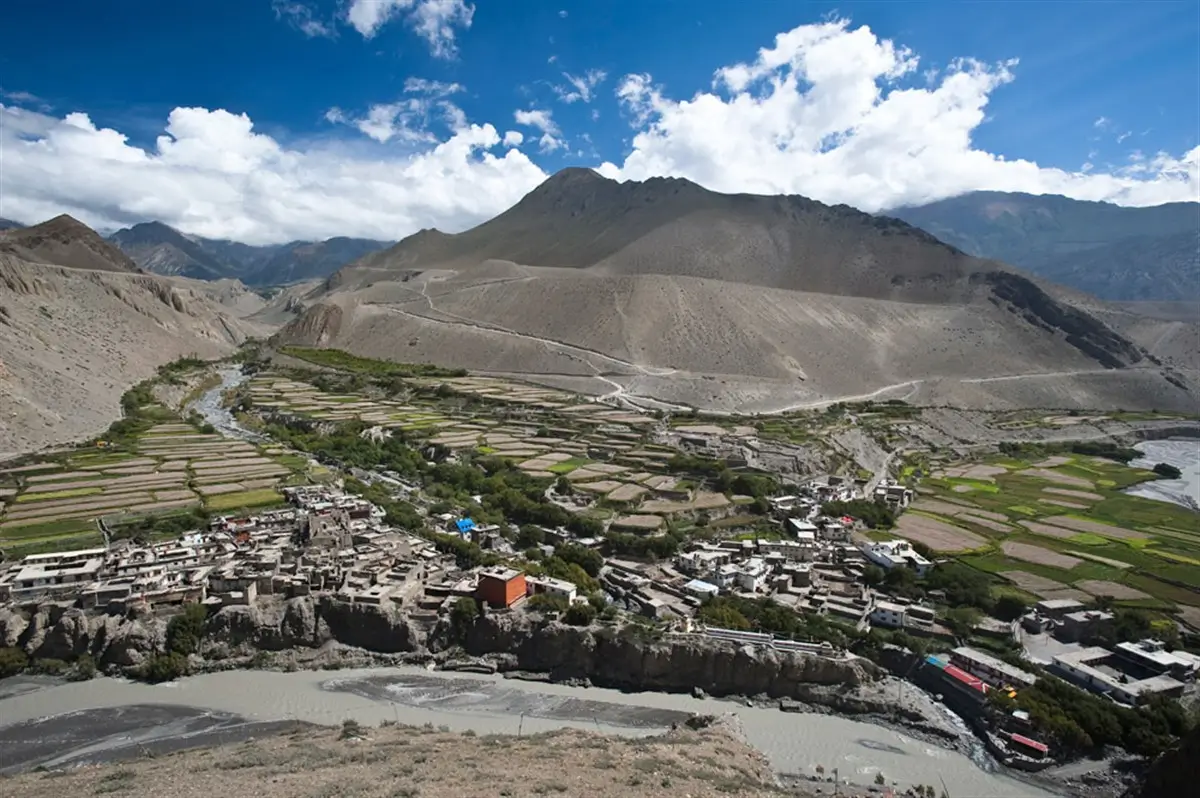
This amazing short fly makes your trip more interesting as you can enjoy beautiful hills and mountain views during this flight. After you reach Jomsom, you will hike to Kagbeni via Lubra Villege( one of the hidden bon Village of Lower Mustang) and visit around Kagbeni ( The Tibetan Village). Kagbeni is the gateway to Upper Mustang.

After breakfast, we have to check for especial Upper Mustang permits and drive till Tangbe by jeep and hike to Tetang. Entry to Tangbe is thus from below a string of beautiful chortens and a ruined fort. Then instead of continuing along the road, it�s better to detour via Tetang. Tetang is one of the best preserved villages of the Shoyul. Arriving in the village from above is particularly beautiful. Then, continue trek to Chhusang. We find three protectors (Rigsum Gonpo) through out this trip. There are three colored Rigsum Gonpas and they represents the trinity formed by the three most popular buddhisattvas in the Mustang area: Jampelyang (Sanscrit:Manjushri), Chenresig (Avalokiteshvara) and Chana Dorje (Vajrapani).

Today we cross Kali Gandaki River and pass through the steep barren land alongside the copper-red canyon. We will visit a Ghyakar village and monastery. We will continue down-hills and up-hills until Samar.

Today we will continue our trek challenging with down-hills and up-hills of the trail and visit Chungsi Cave and continue trek to our destination Shyangboche/Ghiling. Chungsi cave is a popular pilgrimage of Mustang which is believed that Guru Ringpoche meditated in this cave around 8th century. This cave is naturally originated on the cliff.

After breakfast we will leave Shyangboche/Ghiling in the alternative route and head towards Ghemi. As soon as we leave Shyangboche/Ghiling, we cross many hills to get into Ghami. During this journey we will trek up and down walking through narrow trail of semi-arid desert of hills and panoramic Himalayan views. Shyangboche to Ghami route offers you the similar exploration of the village in Tibetan plateau. Many massif mountain views, landscape, culture and natural of this part makes the journey joyful.

Today after crossing the steel bridge at Ghami Khola, we will walk along the longest mani wall of Upper Mustang and pass many chortens to reach Drakmar. Drakmar is one of the most fabulous village and valley with stunning panoramic views of different colored red-cliffs. From below Tensing Riverside Lodge, take the path for Ghar Gumba which winds it�s way through the cliff and turn left and follow the line of the ridge crossing a few small intermediate summits. From the pass we can see the amazing views of Annapurna, Dhaulagiri, Throng peak, Nilgiri and Damodar mountin range. Then after we will continue to Ghar Gumba, the oldest monastery in Upper Mustang which is linked with Guru Rinpoche and Samye monastery in Tibet.

Today we walk through motorable road, the walking trails are mostly flat, wide and gradually up. From the windy pass we can see the first glimpse of an amazing walled capital of Lo Manthang. From the pass we descent down to reach our final destination Lomanthang.

Lo-Manthang is one of the major attraction of this trip, the walled capital of Buddhist kingdom of Lo and is the northern two-thirds of Mustang district founded by Ame Pal in 1380. It has tall whitewashed mud-brick walls, gumpas and Raja�s or Royal or King�s palace. There are four major temples at Lo-Manthang: Jampa Lhakhang or Jampa Gompa the oldest known as the �God house�, Thubchen Gumpa a huge and red assembly hall, Chodey Gumpa the main city Gompa and Choprang Gumpa popularly known as (new gumpa).

Today we trek to Choser, have lunch at Choer, visit around the Choser valley and get back into the teahouse. There are many Tibetan villages, caves and monasteries within this valley to visit. We will visit Jhong cave and deep red Gharphu Gumpa built into the rock face.

Today early in the morning after breakfast we visit Konchok ling cave and trek back to Lomanthang. This cave is famous for it�s amazingly beautiful Murals. Large figures of Vajradhara, Chaturbuja, Avalokiteshvara and Tara are depicted in the Mural of this cave. The main purpose of visiting this Cave is to admire the cave painting in the Leopard�s Grotto, the surrounding countryside, the views from the ar�te, the ambience, the hardiness of the trail all combine to make this the most unmissable itinerary in the whole of North Mustang. The cave consists of a wall 7.5m long covered by 55 panels of 12th century Pala Buddhist art representations. Depicted in the principal fresco are the �The Great Accomplished Ones� or Mahasiddas, historic persons or legendary characters practicing asceticism and psychophysiogic techniques of yoga.

Heading towards Yara leads us to the same route to Tsarang till near the Sungdha Chorten. After that we follow the left route of the trail and pass through the small hills to reach Udi Danda pass. From this pass we can see the panoramic views of different colored cliffs, hills and mountains. We will descend down from Udi Danda till Dhi Village and stop there for lunch. Dhi village is a full of farming fields, we can also go for excursion of Dhi village if interested. Then after we cross Kali Gandaki River and go along the trail on the left side of a Puyung Khola. We can see very beautiful landscapes on the opposite side of near Yara. There are also Chortenas and Rigsum Gompo (the three protectors) on the way. Then after continue 10-20 minutes, we reach our destination.

A day for culture, visiting two exceptional religious sites- Tashi Kabum and Luri Gumpa with the highlights being the unique landscape of the Yara caves. We visit Tashi Kabum which is located in a cliff approximately 50meters above the Puyon Khola on the way to Luri Gumpa. It takes almost an hour to reach Tashi Kabum by foot from Yara village. It is little bit difficult to reach this cave and also we need to crawl down to enter into the cave but once inside we have enough space to stand approximately five-six meters high. In the center of Tashi Kabum cave there is a white chorten under the ceiling of eight suspicious symbols. The symbols painted on the ceiling are surrounded by Vajras and lotus petals as in a Mandala and contains Lokeshvara and a Buddhist Master. The mantra of compassion, �Om mani padme hum� is painted in a lot of places in Upper Mustang. Luri Gumba is also known as Luri cave monastery which is situated inside the cave with numerous delicate paintings. This cave also surrounded by beautiful landscapes and is one of the most important places to worship in the Kingdom. The monastery represents the �Dhukpa Kagyu� sect of Tibetan Buddhism and one of the Mustang�s interesting mysterious. In the center of this cave is a chorten, six meters high, with painted figures on all sides of its rectangular base, on its dome, and also beneath the ritual parasol atop the dome. The domed ceiling is decorated with eight painted images of Mahasiddhas, circling above the chorten.

Go down the valley until you find a shortcut opposite the sheep pens. This joins the main path connecting Yara and the Damother lakes. it passes a large plateau which can be seen clearly from Luri, then climbs the hill to a ledge on the ridge that allows passage to the other side of the crest. A horizontal path then leads to some wide meadows and to a col(Lhetak). Continue along a path on the ridge then a ravine to a high col at 4932m. and descend the other side(sheep pens) and quickly reach the at Ghuma Thati.

Follow the valley of the Kyumupani khola up the riverbed, crossing to its right bank. the ravine makes a sharp bend then a final rocky slop leads to the Kyumu La (5300m) if you went a short detour to the summit of kyumupani(5565m) offers a superb view over the Damother Himal. The descent is no problem. Batsyak khola camp is not a nice place, but there�s no option. because it�s too far to cross both the Kyumu la and the Batsyak La. it�s difficalt for our staff, porters and clients need to be very well acclimatised and and fit.

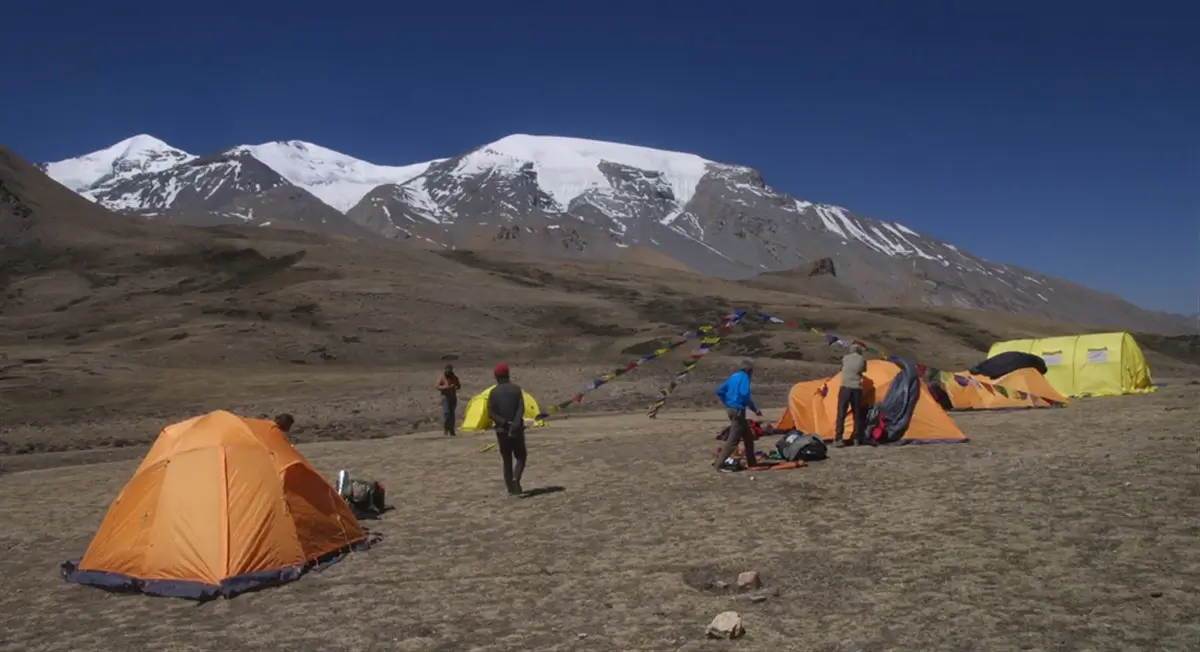
Go back up the river for around 500m. the with path climbs on the right in a series of hairpins up the steep slopes. it then traverses gradually upwards towards the south to the Batsyak la (5505m) The landscapes are still just as spectacular, although at time snow brings additional difficulties. The descent is equally well marked, and wade across a small stream then climb gradually to a little col(4988m) french Camp is just beyond. It�s a wide plain of grass, with water an ideal campsite. Damodar Kunda is just half an hour walk further on, across a small col (5014m). French camp it is possible to climb to a small summit (5140m) by going round it to the right. Numerous shaligrams can be seen, along with a beautiful view.

From french Camp, cross the small col at the end of the gorge and descend gently towards the Damodar lakes. and the pilgrims� shelter. Reach a large chorten opposite the main lake and follow the path, it clearly visible,still on the right bank. It passes several animal pens used in summer by herds of goats. Continue on the flank. The ravine gets narrower and the path becomes steeper and exposed. The roate rejoins the river course,encumbered by blocks and boulders, until Japanese Base Camp.

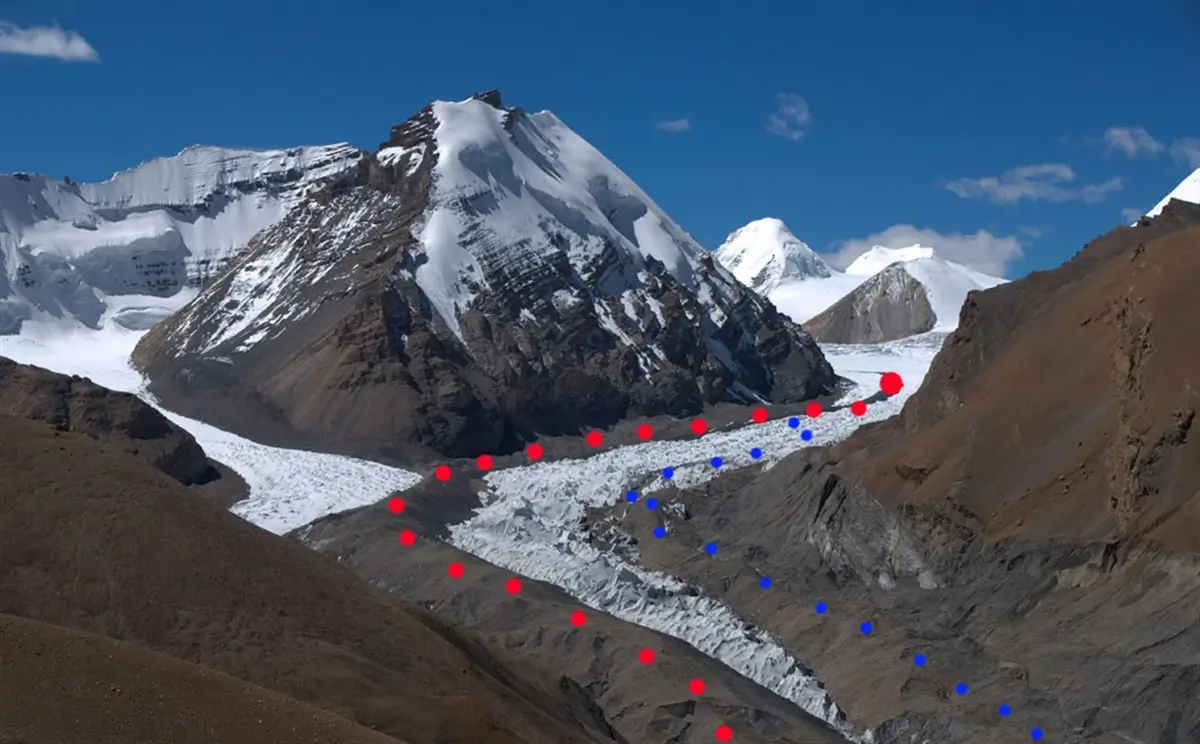
April 25-2015 was a black day for Nepal. when an earthquake struck the country with devastating consequences. Here a huge landlide has totally blacked the path on the left bank of the Khumjungar glacier. slowly a new route will evolve on the east side of the moraine of the right bank. Not so easy initiaally, the route will go directly to thulo Dunga Camp, avoiding all the glacier part, but with a lot of ascent and descent.

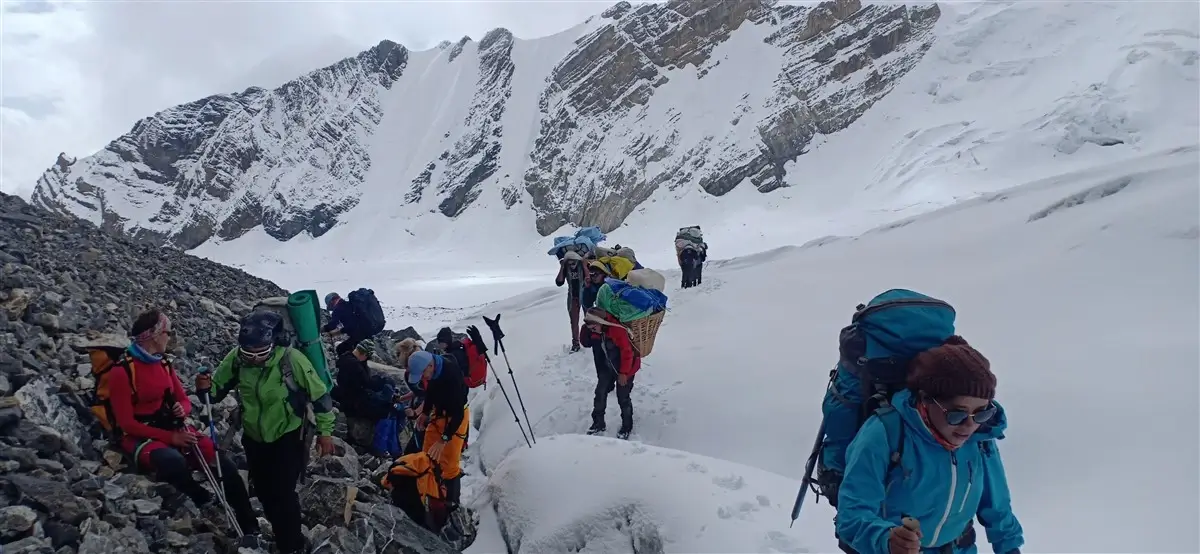
Saribung phedi(5600m). Continue to follow the moraine in an arc then leave it soon to join the glacier. Don�t be tempted by the first col on the left. That is De Hults pass (6050m) It�s Mustang side is very easy but the glacier on the other side is much more complex and full of crevasses. Join the flat of the glacier opposite the Saribung pass and climb it�s wide slopes as best as possible. Normally there is no risk of avalanche if you stay in the middle of the valley and avoid the steeper slopes on the left. The col is very wide, with saribung(6328m) on one side and the two small summit of Sonam Himal and Karsang peak (6225m) on the other. To establish a camp on the col is a good way to immerse oneself in the altitude and make the most of the variety of summits and you can enjoy the panoramic views of mountains. It is of course also possible to climb saribung the same day as the traverse of the col, but it requires much more effort. The ascent of Saribung is easy. The effort required is relatively little, around 300m. Its UIAA classification is level F in snow. It is in any case optional. To return from the summit, descent in the axis of the col to the large ledge. cross it to the left and rejoin the edge of the glacier to avoid a steeper slope with crevasses. watch your feet on the pebbles and descent until you reach the lower, flatter part of the glacier. will certainly prefer to stay on the scree. follow this glacier, which curves to the left, then after a short descent climb again on the central moraine to set up camp. To get your bearings, saribung phedi is situated just opposite the cliffs an angle with the De Hults glacier.

This is the most disagreeable day of the whole crossing. The descent of the black glacier of Batchauk is laborious, on terrain littered with large blocks and scree. A path marked with a few cairns now allow an easier descent. at the exit of the glacier, stay on the left bank so as not to miss Bhrikuti shail base Camp, a great place to make camp side. Continue to descend, wade cross a little river then follow the main river, probably the khumjungar khola. Its necessary to cross a second steam before climbing again to the top of the old lateral moraine. At the top of the climb, you will discover a wide trail from phu, which in a few years will reach Tibet via the Kongyur La. This new path, on the side of the valley and mainly descending, leads directly to Nguru, an abandoned village with a phantom like ambience. Its a comfortable camp in the old fields, next to water.

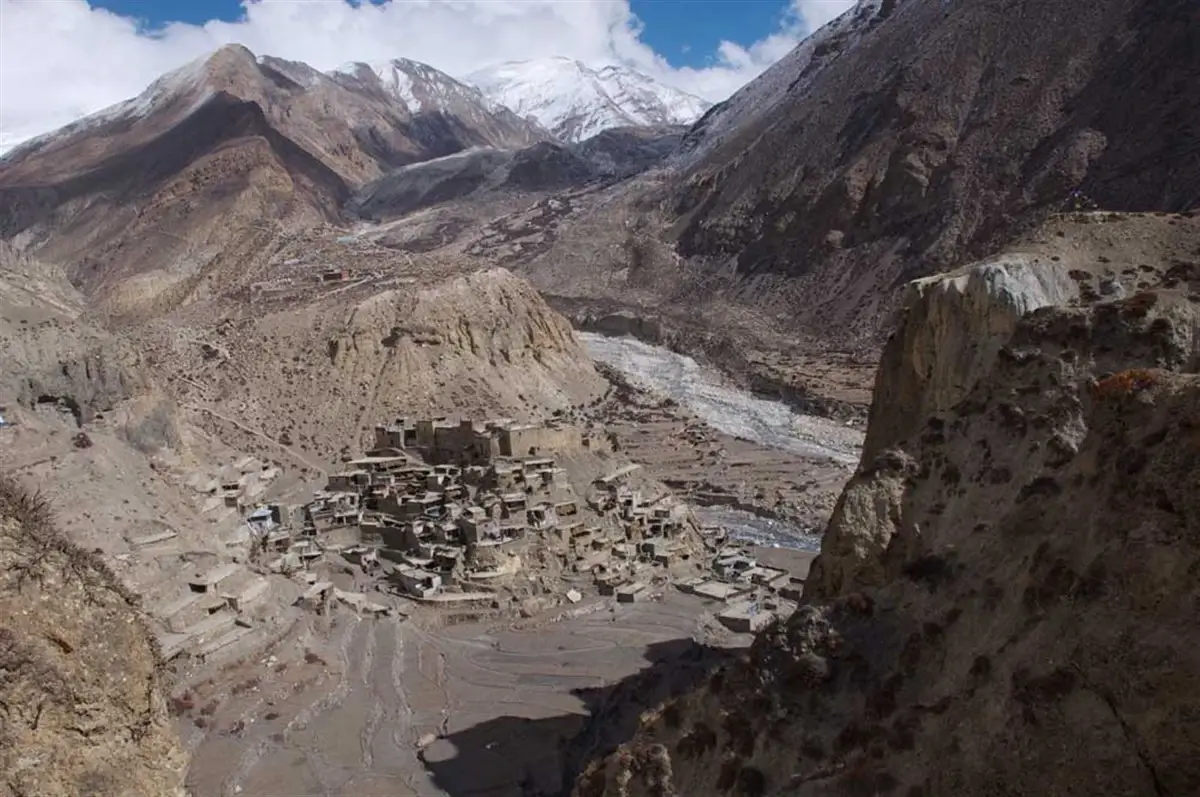
The day is not so far, you can be in Phu for lunch and you can explore Phu village. Cross the river, then climb up to a big chorten seen on the arete. The trail continues to traverse, passing a new chorten and a surprising red monolith, before descending straight into Phu. Phu is a restricted area, and trekkers can only enter with a special permit, which must be issued through an accredited trekking Agency. This village is a very old and traditional village with a historical monastery. so you devoted the time to exploring the village, a stack of Tibetan style mud and stone houses, bedecked with prayer flags and crowned by stacks of firewood.

Phu to Meta, you will have little long day, way is gradual, along the river side. We can see nice rock cliff, Though out this day, and Chyakhu you can have lunch. It can explore few village Kyang and Chyakhu. In winter time, Phu village people move to Kyang to live, and after lunch, you continue trek to Meta.

Meta-Koto(2600m) you should have to walk steep jigjag down hill around 1 hour. We walk through Juniper and pine forests and reach Koto. We will have walk through nice river view and waterfalls. We can see few small tea shop in between Jungle and we can have tea and Biscuit or noodles soup in there. and then continue trek to Koto.

Drive to Besisahar by Jeep and private Bus to Kathmandu.

Shopping and relax day in Kathmandu.

Departure from Nepal.

Want to Customize Your Trip?

We can tailor this trek to your schedule, comfort level, and interests.


What's Included & Excluded

What's Included

  • All airport pick up drop by private vehicles.
  • 4 nights accommodation in a 3-star category hotel in Kathmandu and Pokhara BB plan.(Twin bedroom sharing)
  • Transportation: all by Bus, Plan and jeeps.
  • Permits: Climbing peak permit, Trekking permit, Mustang and Naar Phu special permit.
  • Full board service during the trekking.
  • Trekking and Peak Climbing Guide, cook, support Cooks and porters equipment, Meals, transportation and daily wages.
  • Nepali staff insurance and emergency rescue.
  • All camping equipment, Like Tents, Kitchen, Dining, Table, Chairs, toilet etc.
  • Emergency Medical oxygen, Satellite Phone and Walkie-Talkie in case of emergency.
  • Government tax and Local agency service charge.

What's Excluded

  • International airfare and Nepal entry visa fee.
  • Insurance (compulsory on all trips – ensure you are adequately covered for emergency evacuation).
  • Lunch and dinner in Kathmandu.
  • Spending of a personal expenses, e.g. laundry, snacks and bottle drinks, souvenirs, tips etc.

Essential Information & Preparation

Essential Information

What to Expect

The Saribung Pass Trek is a rigorous 28-day expedition. You should expect long days (6-9 hours) of trekking over varied terrain, including semi-arid deserts, moraines, and glaciers. Accommodation ranges from comfortable teahouses in Lower Mustang to full-scale camping at Saribung base camps and high-altitude zones.

Local Places & Culture

  • Lo-Manthang: The cultural heart of Mustang, featuring the Raja's Palace and ancient Gumbas.

  • Luri Gumpa: A mysterious cave monastery belonging to the Dhukpa Kagyu sect.

  • Phu Village: A traditional stone village where time has stood still, accessible only via a narrow canyon.

Safety & Gear

Saribung Peak Climbing requires "Level F" (Facile) technical skills. While the climb is straightforward for experienced trekkers, you will need crampons, an ice axe, and a harness. Mental resilience and excellent physical fitness are mandatory. Our guides provide oxygen and medical kits for high-altitude safety.


Starting from

$4,495

Per Person (Group Join)